 Review: 7Dollar Essay
 Review: Assignment Master UK
 Review: Assignment Tutor UK
 Review: Assignment Ace UK
 Review: 6Dollar Essay
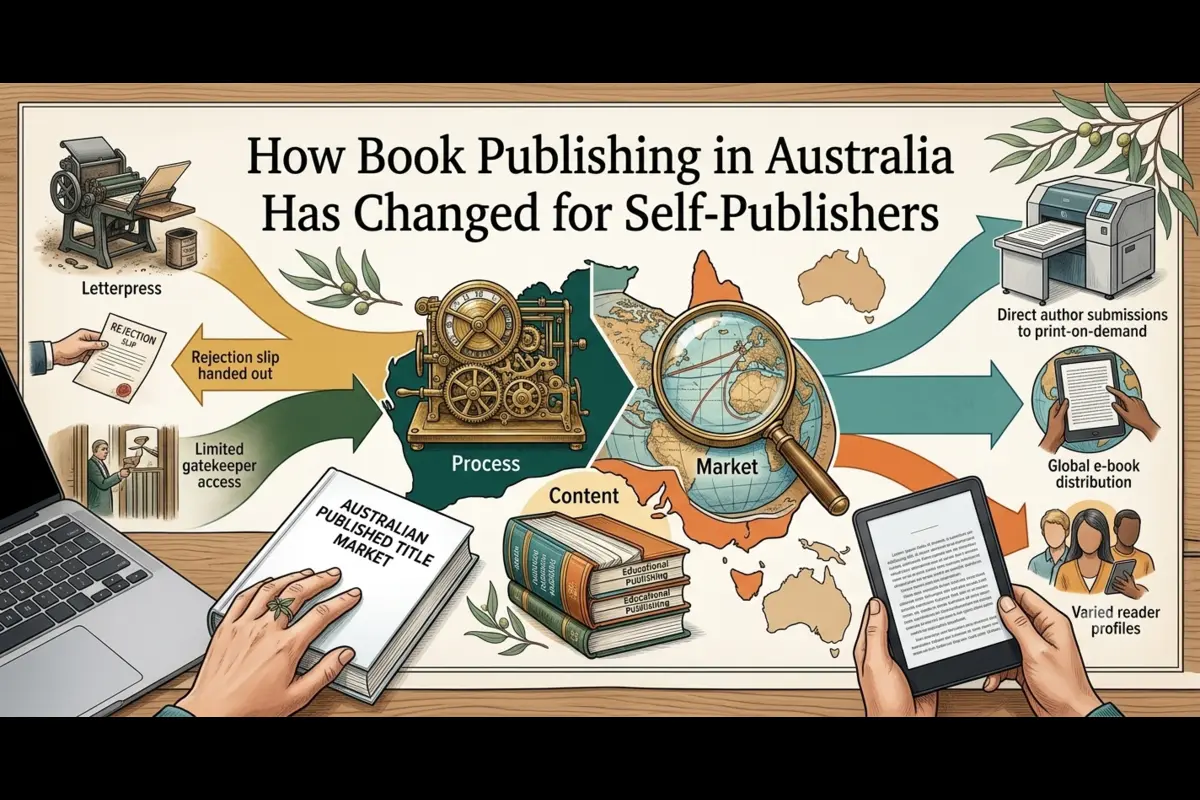
Best Platforms for Self-Publishing in Australia
Most self-publishing guides you’ll find online are written for American authors. The platform advice, the distribution logic, and the “just use KDP” recommendations none of it maps cleanly onto the Australian market. Booktopia exists. Local bookstores still move copies. IngramSpark plays a role that most beginner guides barely mention. If you’ve been following US-centric advice and wondering why something feels off, that’s probably why.
This blog cuts through the noise. Here’s exactly which platforms matter for Australian authors, what each one actually does, and how to use them together without leaving readers or money on the table.
The Australian Market Plays by Its Own Rules
Australia’s book market is smaller than those of the US or the UK, but that doesn’t mean it’s simple. Readers here are genuinely loyal. They follow local authors, support independent bookshops, and shop across multiple platforms rather than defaulting to Amazon, as American readers often do. Kobo has a noticeably stronger foothold here than it does in the US. Booktopia, before its collapse, shaped how Australians bought books online for years, and that habit of shopping beyond Amazon hasn’t gone away.
What This Means for Your Distribution Decisions
Here’s where self-publishing gets interesting. When you work through traditional book publishers, distribution is handled for you. Your book lands in retail channels, libraries, and wholesalers without you lifting a finger. Self-publishing flips that entirely. You become responsible for choosing where your book lives, and that single decision determines whether Australian readers can actually find it in a bookstore, borrow it from a library, or only stumble across it on Amazon.
Get the platform combination right, and you’re reaching the full market. Get it wrong, and you’re invisible to a significant chunk of it.
Amazon KDP
KDP is where most authors start, and for good reason. The setup is straightforward, the publishing process is faster than any other platform, and the reach is undeniable. Amazon is still the first place most readers go when they want to buy a book. For eBooks priced between $2.99 and $9.99 USD, you’re earning up to 70% royalties. Print-on-demand is built in, so there’s no upfront inventory cost.
But here’s what nobody tells you upfront: KDP print does not get your book into Dymocks, into your local independent, or onto a library shelf. It puts your book on Amazon. That’s genuinely valuable, just not sufficient on its own for the Australian market.
KDP Select is worth mentioning as well. It enrolls your eBook in Kindle Unlimited and can boost early visibility, but it requires full exclusivity, meaning your eBook cannot live anywhere else while enrolled. Many Australian authors skip it for exactly that reason. Locking yourself out of Kobo and Apple Books to chase Kindle Unlimited page reads rarely makes sense when you’re trying to build local readership.
IngramSpark: The Platform That Opens Australian Bookstores
If KDP is where you start, IngramSpark is where you get serious. Ingram is the infrastructure that bookstores and libraries already use to order stock. When a Dymocks buyer or a local library wants to add a title, they’re pulling from Ingram’s catalogue and without IngramSpark, your book simply isn’t in it.
Setup is more involved than KDP. You’ll need print-ready files and correct metadata before you upload, as revisions after the fact incur a fee. Get it right the first time.
The wholesale discount trips most authors up. Retailers expect to buy at a discount and return unsold copies. Setting it at 55% with returnability enabled is the standard that gets your book seriously considered for shelf placement, go lower and most retailers won’t engage.
What makes it worth the extra effort is the distribution reach. The print on demand books model here works the same as KDP. No upfront inventory and printed when ordered. Through Ingram’s network, that single copy can reach Australian bookstores, libraries, and international retailers that Amazon simply doesn’t touch.
For any Australian author who wants visibility beyond Amazon, IngramSpark isn’t optional.
Don’t Let Amazon Be Your Only eBook Store
Stopping at KDP means handing a large chunk of your potential readership to platforms you’re not even on. Australian readers are spread across ecosystems, and where they buy depends on what device they use.
Kobo has a genuinely strong presence in Australia. Readers here use it regularly, and Kobo Writing Life offers up to 70% royalties with no exclusivity demands.
Apple Books reaches every iPhone and iPad user. That’s a significant audience that rarely crosses over to Amazon, and royalties sit at around 70% here.
Google Play Books covers the Android side broad reach, decent discoverability, and the same royalty ballpark.
Why Multi-Platform Makes More Sense
KDP Select asks you to choose Amazon over everyone else. For Australian authors, that trade rarely pays off. You’re not just missing a few sales, you’re cutting yourself off from readers who haven’t touched Amazon in years.
Publishing across Kobo, Apple Books, and Google Play alongside KDP takes more initial setup, but it’s a one-time effort. After that, your eBook is available wherever an Australian reader prefers to shop.
The Combination That Actually Works
No single platform covers everything. That’s the honest reality of self-publishing in Australia. The authors who get their books in front of the widest audience aren’t using one platform and hoping for the best. They’re running a deliberate combination.
Here’s how it breaks down:
- KDP handles your Amazon presence with eBook and print options, global reach, and straightforward royalties
- IngramSpark connects you to Australian bookstores, libraries, and wholesale distribution channels that you won’t get with KDP
- Kobo, Apple Books, and Google Play cover the rest of the eBook market, reaching readers who’ve never opened the Amazon app in their lives
Together, these three cover the full landscape. Miss any one of them and you’ve got a gap: either no Amazon presence, no bookstore access, or an entire device ecosystem left out.
FAQs
Q: Which platform is best for self-publishing in Australia?
No single platform covers everything. Most Australian authors use KDP for Amazon reach, IngramSpark for bookstore and library distribution, and Kobo or Apple Books for broader eBook coverage.
Q: Do I need IngramSpark if I’m already on KDP?
Yes. KDP print doesn’t distribute to Australian bookstores or libraries. IngramSpark is what connects your book to the retail and library network that Amazon doesn’t reach.
Q: What is print on demand and how does it work for Australian authors?
Print-on-demand means your book is printed only when someone orders it, no upfront inventory costs. Both KDP and IngramSpark offer this, but IngramSpark’s distribution network gives your printed book access to far more retail channels locally.
Your Next Move
The platform strategy is the easy part to understand. The harder part is execution. If you haven’t sorted your ISBN through Thorpe-Bowker yet, that’s where to start. Once that’s done, IngramSpark setup is your first real priority. Everything else builds from there.
Your book deserves to be found. Set it up properly from the beginning.